CUSTOM SOFTWARE, APPS & SAAS
Build the software your business actually needs.
When off-the-shelf tools create more work than they solve, EmberNova Digital helps design and build custom software, internal applications, client portals, and SaaS products around the way the business actually operates.
From an internal tool that replaces a fragile spreadsheet to a full software product built for customers, the work starts with the problem, not the code.
2026 Best of Florida® Winner · Business Consulting Firms
Florida-based · Serving businesses nationwide · Licensed & Insured · Confidential by design
WHEN THE SOFTWARE BECOMES THE WORKAROUND
Your business should not have to bend itself around software that almost works.
Most businesses do not wake up one day and decide they need custom software. They arrive there gradually.
A spreadsheet becomes mission-critical. Employees copy information between systems. A generic platform handles 70 percent of the process while the other 30 percent lives in email, notes, shared drives, and employee memory. A new business idea cannot be delivered cleanly with the tools already available.
At some point, the workaround becomes more expensive than solving the underlying problem.
This may be the right conversation when:
- A spreadsheet or shared document has become a core operating system
- Multiple software subscriptions are still leaving important workflow gaps
- Employees are entering the same information in several places
- An internal process needs a simpler purpose-built application
- Customers or partners need a secure portal or self-service experience
- The business has a software or SaaS product idea but needs help turning it into a buildable product
- Existing software has become too rigid, expensive, or complicated for the way the business actually works
Custom software becomes valuable when the cost of working around the problem exceeds the cost of solving it properly.
THE RIGHT SOFTWARE DECISION
Sometimes the right answer is custom software. Sometimes it is not.
Building software simply because something can be built is an expensive mistake.
Before recommending a custom application, EmberNova Digital looks at the business problem, available platforms, workflow complexity, expected users, integrations, security requirements, ownership goals, and long-term cost.
Sometimes an existing tool can solve the problem with better configuration or automation.
Sometimes the business has genuinely outgrown what off-the-shelf software can provide.
The objective is not to sell you custom software. It is to determine whether custom software solves the problem better.
We evaluate:
Business fit
Does the software support the actual process, or is the business continually working around it?
Total cost
Compare subscription costs, implementation, customization, employee time, integrations, and long-term ownership.
Complexity
Determine whether the requirement is truly unique or simply poorly served by the current stack.
Scalability
Consider whether the solution can support additional users, locations, workflows, customers, or transaction volume.
Ownership & control
Evaluate how important control over data, functionality, intellectual property, and future development is to the business.
Integration requirements
Understand what the software needs to exchange with existing systems, APIs, databases, or business workflows..
CUSTOM DIGITAL PRODUCTS
From internal tools to customer-facing software.
Custom development can solve an internal operating problem, create a better client experience, or become a product in its own right. The architecture depends on what the software needs to accomplish and who needs to use it.please
Internal Business Applications
Purpose-built tools for workflows that have outgrown spreadsheets, email, or disconnected software.
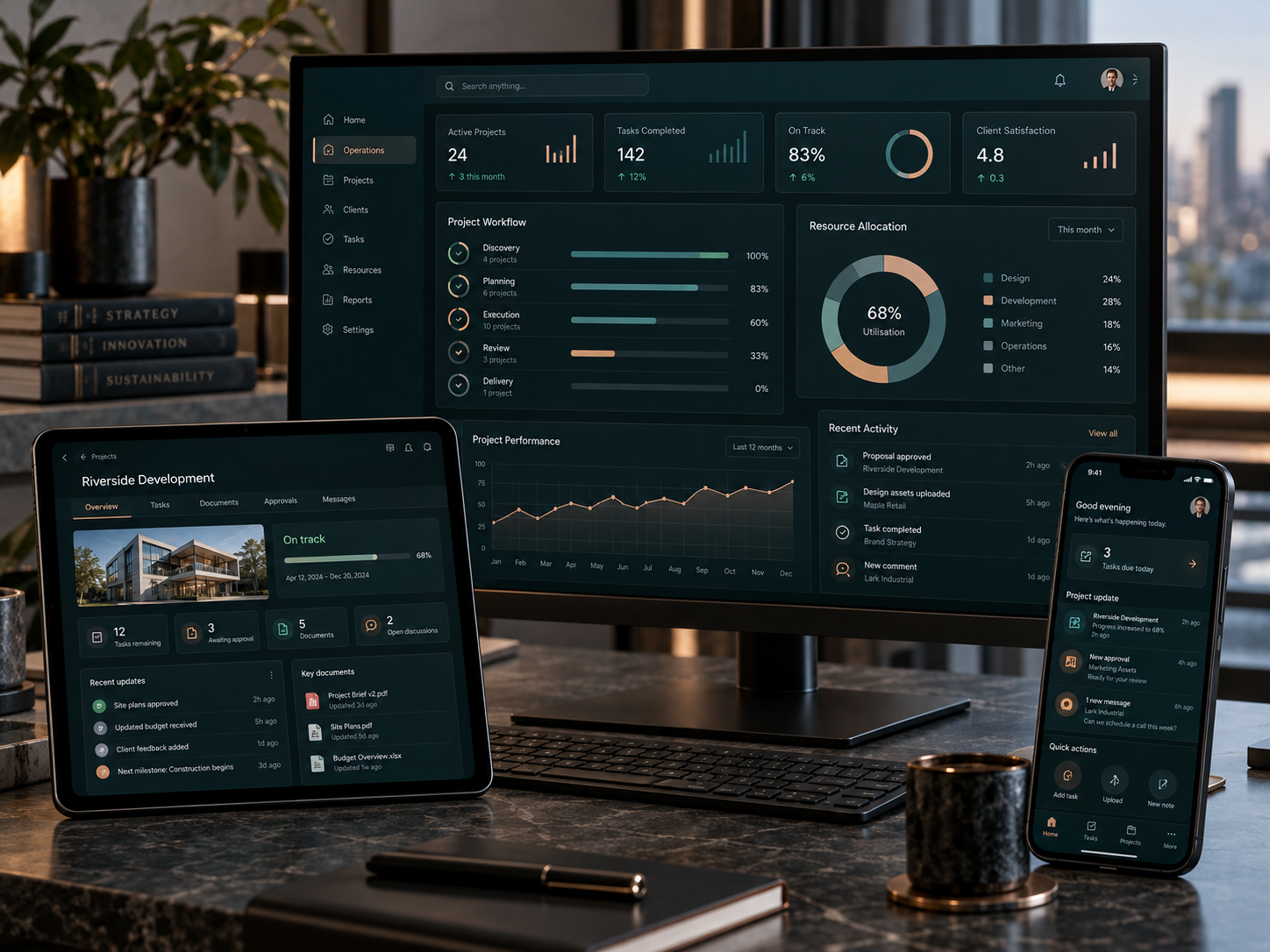
Examples can include project tracking, estimating, intake, approvals, reporting, operational dashboards, and internal management tools.
Client & Partner Portals
Secure digital environments where customers, vendors, contractors, or partners can access information, submit requests, upload documents, track status, or interact with the business.
Custom Workflow Platforms
Applications that bring multiple operational processes into one structured system rather than forcing employees to jump between disconnected tools.
SaaS Products
Web-based software products designed for external users, subscriptions, recurring access, or specialized business markets.
Support can span product definition, architecture, user workflows, development planning, testing, launch readiness, and continued evolution.
Mobile & Responsive Applications
Digital tools designed to work effectively across desktop, tablet, and mobile environments for teams or customers who need access wherever the work happens.
Software Modernization & Extension
Improve, replace, or extend existing software when the underlying product still has value but the technology, usability, integrations, or architecture no longer supports the business.
Have a software idea, a fragile workaround, or a system that has reached its limit?
We can evaluate what already exists, define what the business actually needs, and determine whether the right next step is configuration, integration, modernization, or a custom build.
FROM IDEA TO BUILDABLE PRODUCT
Define the product before development starts consuming time and money.
Custom software gets expensive quickly when requirements are vague, workflows are unresolved, or development starts before the business has decided what the product actually needs to do.
EmberNova Digital helps turn the problem, idea, or operational requirement into a clearer product plan before and during development.
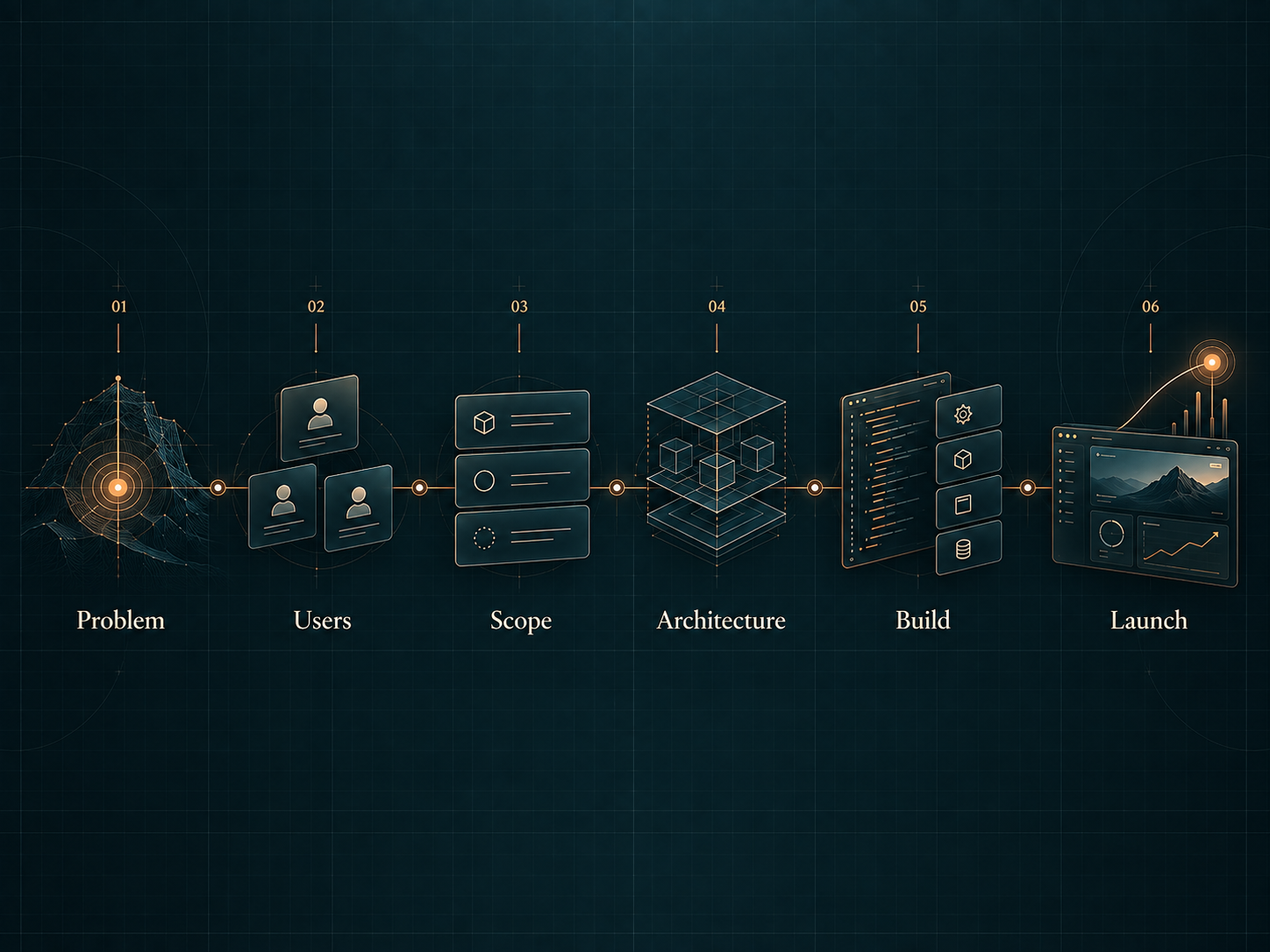
1. Define the Problem
Clarify what the software needs to solve, who needs it, what currently happens instead, and what success should look like.
This may involve internal users, customers, partners, operational teams, or a new market opportunity.
2. Map Users & Workflows
Identify who will use the software, what each user needs to accomplish, and how information should move through the system.
This is where roles, permissions, handoffs, edge cases, and operational dependencies begin to become visible.
3. Scope the Product
Translate the requirements into features, priorities, integrations, data needs, technical constraints, and a realistic first release.
The goal is to separate what the product must do from what can wait.
4. Design the Architecture & Experience
Define how the application should be structured technically and how users should move through it.
That includes application logic, data relationships, interfaces, security considerations, integrations, and the overall user experience.
5. Build, Test & Refine
Develop the product in controlled stages, validate functionality, test workflows, identify defects, and refine based on real use cases rather than assumptions.
6. Launch & Evolve
Prepare the product for real users, establish monitoring and ownership, and continue improving it as the business, market, or software requirements change.
The strongest software projects reduce uncertainty before they increase development effort.
The right software should create leverage for the business, not become another system the business has to manage around.
BUILT AROUND THE BUSINESS
The value is not in having custom software. It is in removing the limits that generic software creates.
A custom application should make an important part of the business simpler, clearer, or more scalable.
That might mean replacing a fragile spreadsheet, consolidating disconnected tools, improving the customer experience, creating better visibility, or turning a new idea into a product that can generate revenue.
What this can improve
Operational efficiency - Reduce duplicate entry, manual reconciliation, unnecessary handoffs, and the work created by software that does not match the real process.
Data visibility - Bring the right information into one place so employees and leadership can see status, activity, performance, and next steps more clearly.
User experience - Create a simpler experience for employees, customers, partners, or vendors by removing unnecessary screens, workarounds, and complexity.
Scalability - Support additional users, transactions, workflows, locations, or customers without forcing the business to rebuild the process every time it grows.
Control & ownership - Gain greater control over functionality, data, integrations, product direction, and the future evolution of the software.
Revenue opportunity - Turn specialized knowledge, processes, or market needs into a software product that can become a new service, subscription, or standalone revenue stream.
BUILT TO LAST
Custom software should become a business asset, not a new dependency.
The software itself is only part of the system.
Long-term value depends on who controls the code, how access is managed, where data lives, how updates are handled, and whether the business can maintain or transfer the product without relying on one person or one undocumented setup.
EmberNova Digital treats those decisions as part of the build, not an afterthought.
What that includes
Code & intellectual property ownership - Clarify who owns the software, source code, custom logic, design assets, and related intellectual property.
Access & administrative control - Organize hosting, repositories, domains, databases, third-party services, credentials, and administrative permissions around business ownership.
Security by design - Build appropriate authentication, permissions, data handling, logging, and security controls into the product architecture.
Documentation - Maintain useful technical and operational documentation so future changes do not depend on institutional memory.
Maintainability - Favor architecture and development decisions that can be understood, tested, updated, and extended as the product evolves.
Continuity & transferability - Structure the system so another qualified developer or team can understand and support it if the business changes direction, grows, or transitions ownership.
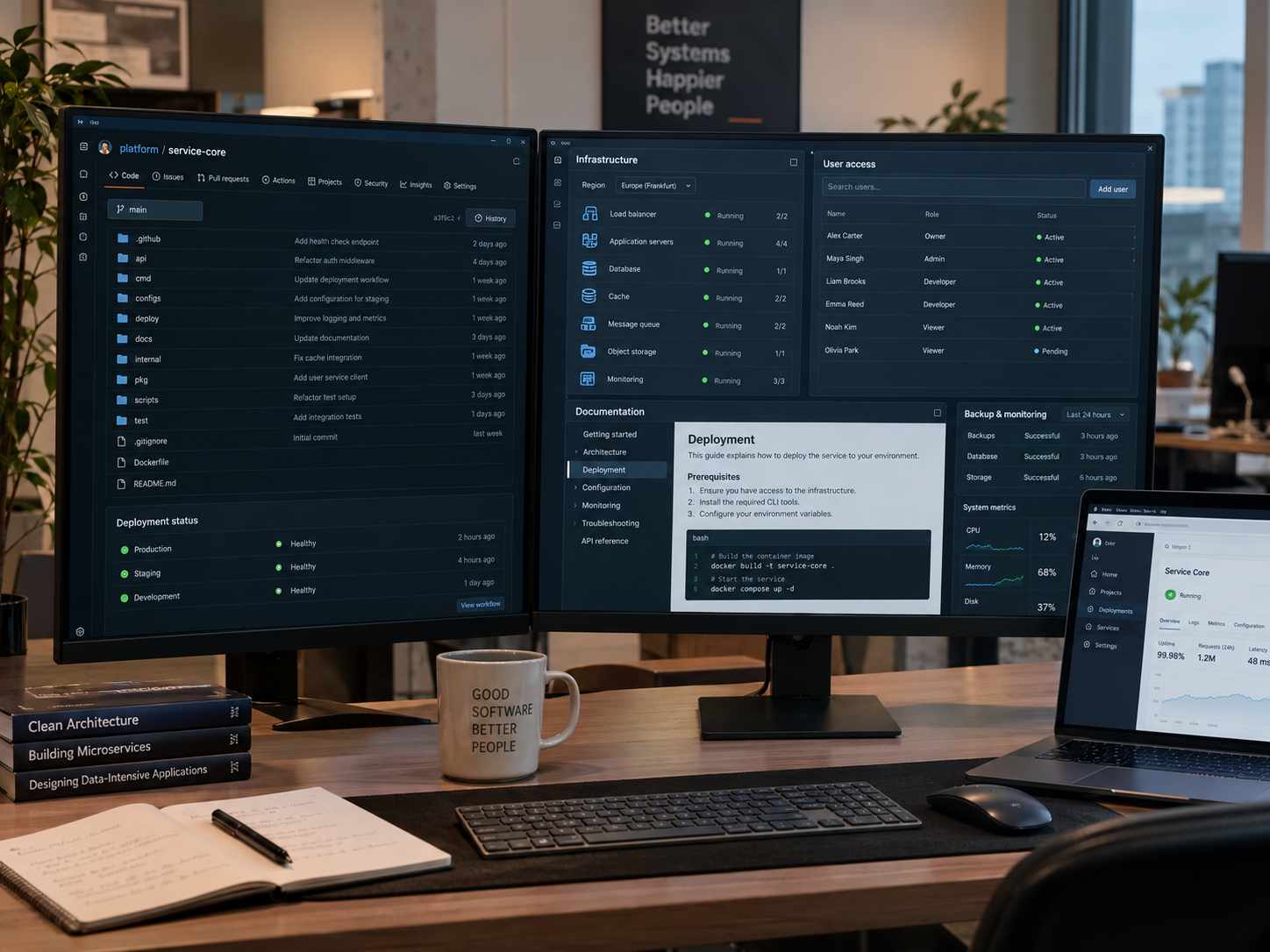
The business should own the product, understand the product, and be able to move forward without being trapped by the product.
Already have custom software that no one wants to touch because only one person understands it?
We can assess the architecture, ownership, documentation, dependencies, and risk before deciding whether the right move is stabilization, modernization, or replacement.
REAL PRODUCTS. REAL BUSINESS USE.
From partner portals to governed SaaS and digital workforce platforms.
The strongest software projects solve a concrete operational problem, create a better user experience, or open a path that existing platforms could not support.
TCC Pro
Partner Platform · Referral Operations · Trade Access
A custom partner platform planned for The Cabinet Collective to help designers, builders, contractors, and referral partners manage referrals, opportunities, consultations, partner resources, and trade-related activity from one account experience.
Custom Platform · Multi-Brand Operations · Workflow Design · Product Planning
ENDOA
Custom SaaS · Assessment Platform · Governed Product Architecture
A governed Digital Operations Assessment platform in active build that structures evidence review, scoring, findings, and reporting across digital ownership, security, performance, discoverability, automation, and AI readiness.
Custom SaaS · Assessment Platform · Product Architecture · Secure Application
ENDOW
Digital Workforce Platform · AI Operations · Governed Execution
An executive digital workforce platform in architecture and pre-production development, designed to coordinate AI workers across departments, connected systems, policies, approvals, and operational priorities while keeping human authorization visible where it matters.
Internal Platform · Workflow Software · Automation · Governance
The software may be internal, customer-facing, or a product in its own right. The standard is the same: it has to solve a real business problem well.

Featured in Best of Florida
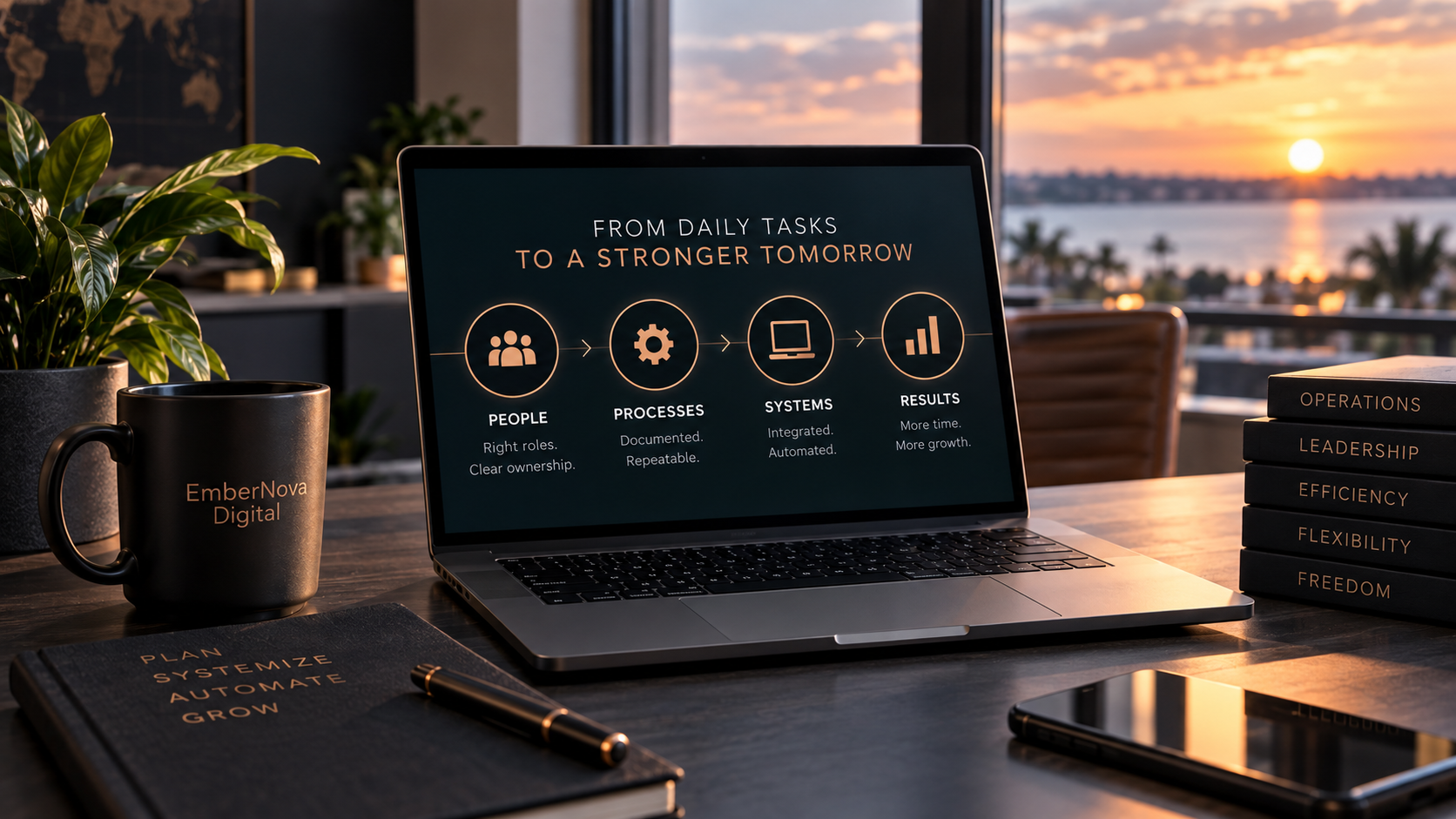
The Business That Runs Itself
A closer look at why stronger systems, clearer ownership, and reduced founder dependency matter as businesses grow, transition, and prepare for what comes next.


COMMON QUESTIONS
Custom software works best when the business case is clear before the build begins.
How do I know if I actually need custom software?
Custom software makes sense when existing tools create too much operational friction, leave important workflow gaps, force repeated manual work, or cannot support a product or experience the business needs. We start by evaluating whether configuration, integration, modernization, or a custom build is the better answer.
Can you improve an existing application instead of rebuilding it?
Yes. In many cases, the right move is to stabilize, extend, modernize, or redesign part of an existing system rather than replace everything. That decision depends on the architecture, maintainability, security, usability, and how well the current product can still support the business.
Do you build internal tools as well as customer-facing software?
Yes. Custom development can include internal business applications, client and partner portals, workflow platforms, operational dashboards, responsive web applications, and SaaS products intended for external users.
What happens before development starts?
We define the problem, users, workflows, requirements, integrations, priorities, technical constraints, and first-release scope. That work helps reduce wasted development effort and gives the build a clearer foundation.
Can custom software connect with the systems we already use?
Often, yes. Depending on the platforms involved, a custom application may integrate with existing CRM, accounting, scheduling, communications, file-storage, reporting, or other business systems through APIs, webhooks, native integrations, or custom logic.
Who owns the software after it is built?
Ownership should be clear from the beginning. EmberNova Digital treats source code, data, credentials, domains, hosting, repositories, documentation, and administrative access as part of the product architecture so the business is not left dependent on an undocumented setup.
Do you build AI into custom software?
When it serves a real function, yes. AI can support classification, summarization, recommendations, content generation, analysis, workflow assistance, or governed digital-worker capabilities. It should be added where it improves the product, with appropriate oversight and controls.
Can you help turn an idea into a SaaS product?
Yes. Support can include product definition, workflow design, scope, architecture, feature prioritization, development planning, testing, governance, launch readiness, and continued product evolution.
READY TO BUILD WHAT THE BUSINESS ACTUALLY NEEDS?