
STRATEGIC OPERATIONS
Turn the next stage of your business into an operating plan.
When growth creates more decisions, more moving parts, and more dependence on the owner, the business needs stronger operating structure.
EmberNova Digital provides Fractional COO support and operational strategy to help businesses set priorities, improve accountability, strengthen processes, and turn ideas into work the team can actually carry forward.
2026 Best of Florida® Winner · Business Consulting Firms
Florida-based · Serving businesses nationwide · Licensed & Insured · Confidential by design
Fractional COO & Operation Strategy is part of EmberNova Digital’s Strategic Operations practice.
OPERATIONAL STRATEGY
You do not need more ideas. You need a way to move the right ones forward.
Growth creates more decisions, more coordination, and more opportunities for important work to stall between people, departments, or systems. When priorities keep changing or too much still depends on the owner, the business needs stronger operating structure.
Fractional COO support brings that structure to the next stage through clearer priorities, defined ownership, practical planning, operating rhythms, and follow-through.
STRATEGY
STRUCTURE
ACCOUNTABILITY
EXECUTION
A strong fit when growth is creating more complexity than the current operating model can carry.
Fractional COO & Operational Strategy is a strong fit for businesses that are growing, changing, or carrying too much founder dependency.
- Too many decisions, approvals, or relationships still depend on the owner
- Growth is moving faster than the systems supporting it
- Leadership roles or decision ownership are unclear
- Processes exist, but not consistently across the business
- Priorities shift faster than the team can execute them
- The business needs stronger structure for scale, succession, or transition
- The business is preparing for growth, succession, transition, or reduced owner involvement.
STRATEGIC OPERATING SUPPORT
Put structure behind the decisions, priorities, and work that matter most.
Fractional COO support sits between owner vision and day-to-day execution. The work is practical: establish the current state, identify what is limiting progress, assign ownership, define the operating rhythm, and keep the highest-priority initiatives moving.
Current-State Assessment
Review workflows, leadership structure, systems, capacity, priorities, and operating friction before deciding what needs to change.
90-Day Operating Priorities
Translate larger goals into sequenced priorities, owners, milestones, dependencies, and realistic next actions.
Leadership & Decision Structure
Clarify responsibilities, decision rights, reporting relationships, and where accountability belongs as the business grows.
KPI & Scorecard Rhythm
Define the numbers that actually matter and create a practical cadence for reviewing performance, capacity, delivery, and progress.
Process & Knowledge Systems
Map critical workflows, standardize recurring work, and build documentation that keeps important operating knowledge with the business.
Cross-Functional Execution
Coordinate initiatives that span operations, people, technology, finance, customer experience, or multiple departments rather than treating each issue in isolation.
The value of a fractional COO is not having someone else run your business. It is having someone help you build a business that can run better.
Need a strategic right hand without adding another full-time executive?
Let’s look at where the business is headed, what is getting in the way, and what needs structure first.
FROM STRATEGY TO EXECUTION
Turn priorities into a working operating cadence.
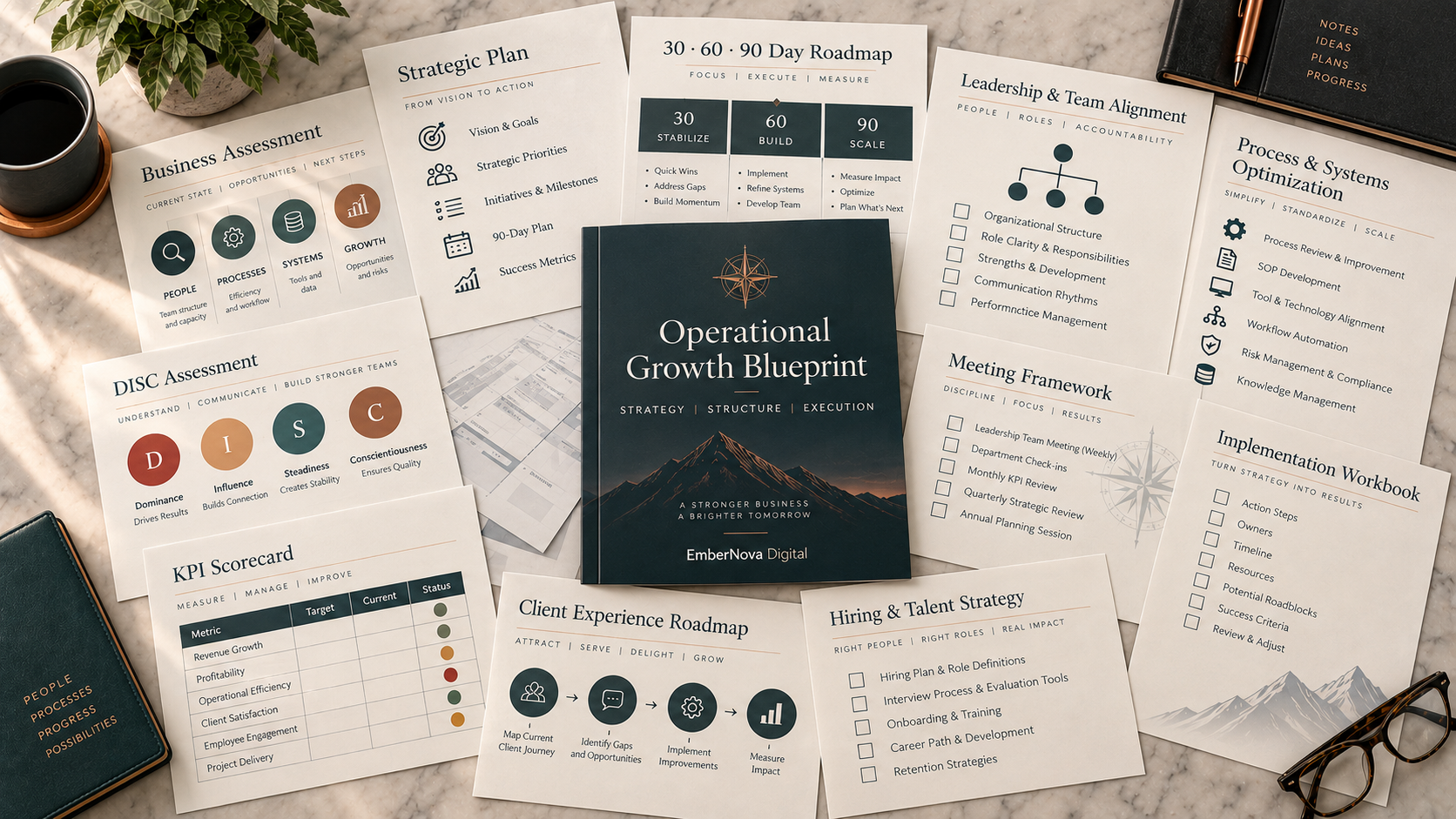
The engagement starts by understanding how the business actually works today, then creates a practical structure for what changes next..
1. Assess
Understand the current state.
Review operations, workflows, leadership responsibilities, systems, capacity, priorities, and the areas creating friction.
2. Prioritize
Decide what matters now.
Separate urgent noise from the few operating changes that will create the most meaningful movement.
3. Build the operating plan
Translate direction into owners, milestones, and measures.
Create a practical 30-, 60-, or 90-day plan with defined responsibilities, KPI targets, process changes, technology needs, documentation, and dependencies.
4. Establish the cadence
Create a rhythm the team can actually maintain.
Build the meeting, scorecard, follow-up, and accountability structure needed to keep priorities visible and decisions moving.
5. Execute and refine
Keep the work moving as conditions change.
Remove roadblocks, monitor progress, adjust priorities, and strengthen the operating system without creating unnecessary management overhead.
The goal is not another strategy document. It is an operating system the team can keep using.
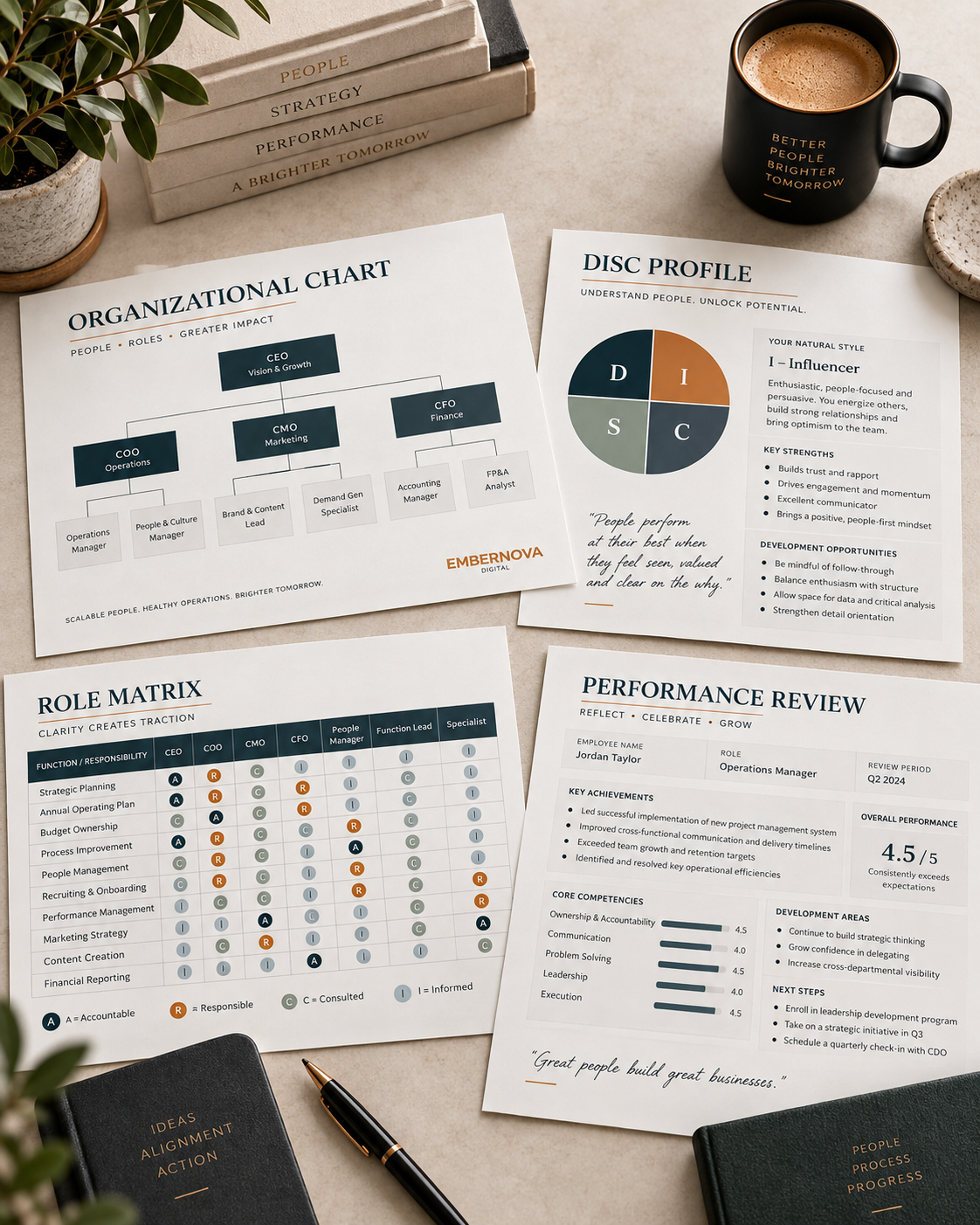
A stronger org chart is not about adding hierarchy. It is about making responsibility easier to see.
PEOPLE & ACCOUNTABILITY
Growth gets harder when responsibility is unclear.
As a business grows, informal roles stop scaling. Decisions get duplicated, important work falls between departments, and strong employees can end up carrying responsibilities that were never clearly assigned.
What this can include
- Role clarity - Define who owns what, where decisions belong, what requires escalation, and which responsibilities need to move as the business grows.
- Leadership structure - Strengthen reporting lines, management responsibilities, and communication across departments.
- Strengths and development - Use tools such as DISC and structured review processes to better understand communication styles, strengths, development needs, and team dynamics.
- Performance expectations - Create clearer expectations, review rhythms, accountability measures, and development conversations.
- Hiring and succession planning - Identify capability gaps, define future roles, and prepare the organization for hiring, promotion, or leadership transition.
- Meeting and communication rhythms - Build practical leadership and team cadences that keep priorities visible and decisions moving.
SYSTEMS & STANDARDIZATION
Growth becomes easier when the business stops reinventing how work gets done.
As companies grow, informal processes become expensive. The same task gets handled three different ways, knowledge lives in people’s heads, and small inconsistencies turn into larger operational problems.
Fractional COO support helps turn scattered ways of working into clearer, repeatable systems the team can actually use.
What this can include
- Process mapping - Document how important work moves through the business today and identify where handoffs, delays, or unnecessary steps are creating friction.
- SOP development - Create practical standard operating procedures for recurring work so quality does not depend on who happens to be available.
- Meeting and management cadence - Build structured rhythms for leadership meetings, department check-ins, KPI reviews, and priority tracking.
- KPI and scorecard structure - Define the numbers that actually matter and create a consistent way to review performance, capacity, delivery, and progress.
- Workflow and technology alignment - Make sure the systems, software, and automation supporting the business match the real process rather than forcing the process around the tools.
- Knowledge management - Create a reliable source of truth for procedures, decisions, templates, standards, and operating information so critical knowledge stays with the business instead of living in inboxes or individual employees’ heads.
- Knowledge continuity - Document critical knowledge, clarify responsibilities, and reduce dependence on any one person so the business is easier to operate, transition, or hand off.

Standardization is not about making the business rigid. It is about making good work easier to repeat. The goal is a business that can grow without adding the same amount of confusion, rework, and owner involvement every time volume increases.
PRICING & STARTING POINTS
Start with the level of operating support the business actually needs.
Fractional COO & Operating Leadership
Starts at $5,500 per month · 6-month minimum
Best for established businesses that need ongoing operating leadership through growth, restructuring, succession, capacity pressure, or a significant change initiative.
Typically includes: current-state assessment, 90-day operating priorities, leadership and accountability structure, KPI and meeting cadence, cross-functional execution support, and ongoing operating review.
Systems & Capacity Review
Starts at $1,250
Best when the business knows something is creating friction but needs a focused assessment before committing to ongoing leadership or a larger systems change.
Typically includes: workflow and capacity review, bottleneck and owner-dependency analysis, systems evaluation, prioritized recommendations, and a practical next-step roadmap.
Not sure whether the problem is staffing, systems, or operating structure?
A Systems & Capacity Review identifies workflow friction, owner dependency, capacity constraints, and operating gaps before you commit to a larger change.
REAL WORK. REAL OPERATIONS.
Operating strategy should change how the business actually runs.
Fractional COO work rarely lives in one department. The strongest engagements connect leadership, systems, technology, process, growth, and execution so the business can move forward with less friction and better visibility.
Growth & Standardization for a Multi-Department Service Business
Supported leadership with operational roadmaps, role clarity, management structure, hiring and performance processes, SOP development, KPI planning, client-experience standards, capacity planning, and succession-readiness work designed to help the business move into its next stage.
Operational Strategy · Leadership Structure · Standardization · Growth Readiness
The Cabinet Collective / Custom Cabinetry Direct
Helped restructure a growing multi-brand cabinetry business across operational planning, multiple digital platforms, CRM automation, referral and trade-partner workflows, Microsoft 365 and domain infrastructure, security remediation, and custom SaaS planning.
Strategic Operations · Systems & Engineering · Digital Infrastructure
Spreck Construction Consulting
Built and refined the operating systems behind an independent construction advisory business, including service structure, CRM organization, attorney outreach workflows, prospect management, repeatable follow-up, and business-development processes designed to reduce manual effort.
Strategic Operations · CRM Systems · Process Design · Business Development
The work changes from business to business. The objective stays the same: stronger structure behind the next stage of growth.

Featured in Best of Florida
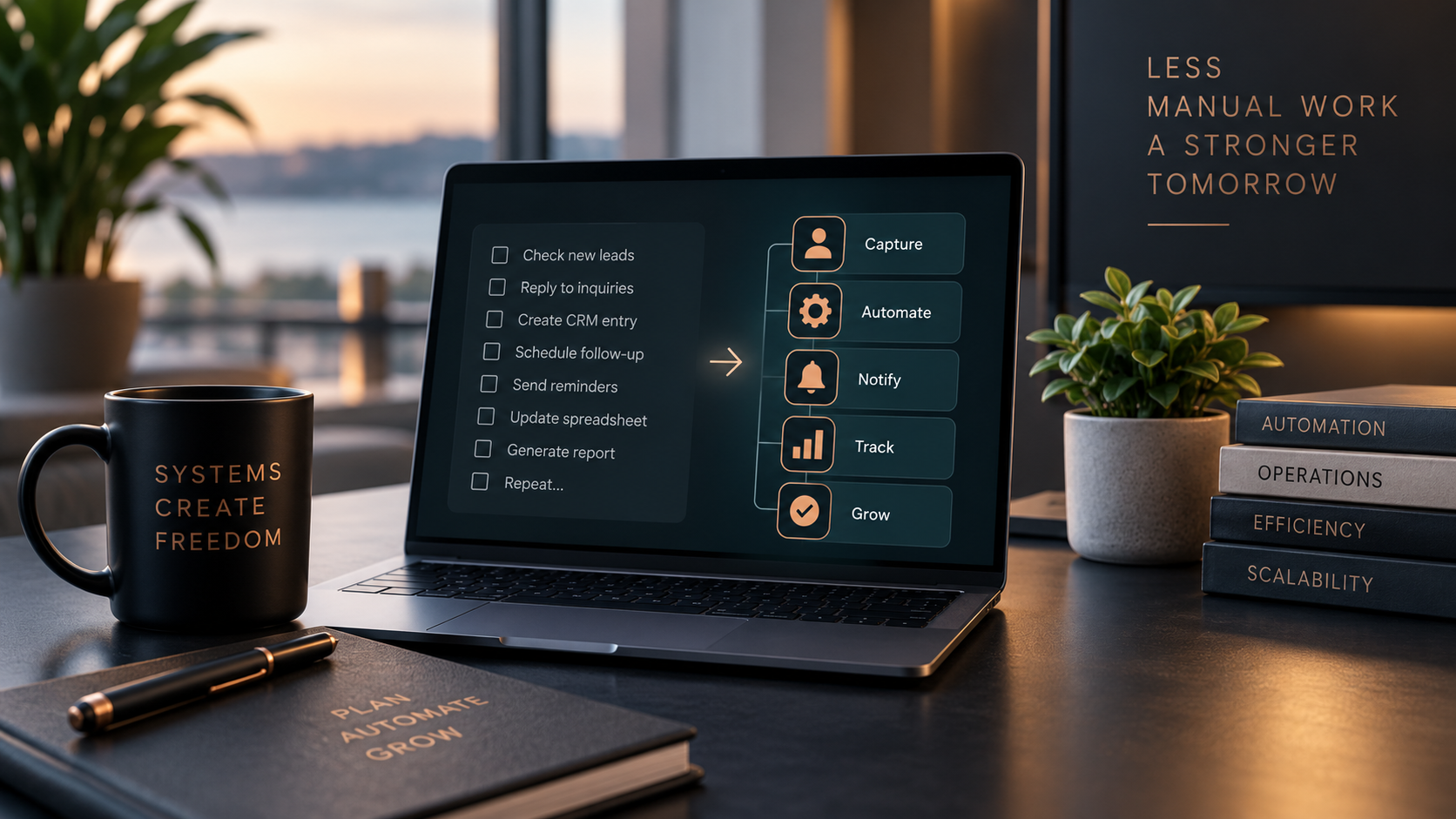
The Business That Runs Itself
A closer look at why stronger systems, clearer ownership, and reduced founder dependency matter as businesses grow, transition, and prepare for what comes next.

COMMON QUESTIONS
Fractional COO support looks different in every business.
The scope depends on the stage of the business, the leadership structure, the operational pressure points, and what needs to change next. These questions cover the areas business owners most often want clarified before deciding whether fractional COO support is the right fit.
What does a fractional COO actually do?
A fractional COO helps turn business goals into operating priorities, structure, systems, accountability, and execution without requiring a full-time executive hire.
How is this different from a business coach?
The work is more embedded and operational. It focuses on how the business is structured, how decisions move, how teams execute, and what systems need to change.
What size businesses benefit most from fractional COO support?
Fractional COO support is often a good fit for established businesses dealing with growth, increasing complexity, leadership changes, owner dependency, or a major transition. The need is usually better defined by what is happening inside the business than by a specific revenue or employee count.
How is a fractional COO different from a consultant or project manager?
A fractional COO works across the business at the operating level, helping translate owner vision into priorities, structure, accountability, and execution. The role can involve leadership alignment, process improvement, growth planning, systems, technology, and cross-functional problem solving. It is broader than managing a single project and more embedded than providing one-time recommendations.
What happens in the first 90 days?
The first phase typically focuses on understanding the current operating environment, identifying the highest-priority constraints, clarifying ownership, and establishing a practical operating cadence. Depending on the engagement, that may include workflow reviews, leadership structure, KPI and scorecard development, process documentation, capacity planning, and a 30-, 60-, or 90-day operating roadmap.
Can you work with our existing leadership team?
Yes. The goal is usually to strengthen the existing team, clarify responsibilities, improve operating cadence, and create better visibility across the business.
Do you help with SOPs, KPIs, and accountability systems?
Yes, when they support the priorities of the engagement. Those may include SOPs, scorecards, meeting rhythms, role clarity, roadmaps, and performance systems.
Is fractional COO support ongoing?
It can be. Some businesses need a focused assessment and roadmap. Others benefit from ongoing strategic and operational support during growth or transition.
How do I know whether I need a fractional COO instead of a full-time COO?
Fractional support can make sense when the business needs experienced operational leadership but does not yet need, want, or justify a full-time executive role. It can also be useful during periods of growth, transition, restructuring, succession planning, or major initiatives when additional operating capacity is needed.
How much does Fractional COO support cost?
Fractional COO & Operating Leadership starts at $5,500 per month with a six-month minimum. Businesses that need a focused assessment before committing to ongoing support can begin with a Systems & Capacity Review starting at $1,250.
READY FOR WHAT’S NEXT